
Every business owner wants to save money. Whether you're launching a startup, expanding a local business, or building your first online presence, keeping costs under control is always a priority.
That's why many businesses are naturally attracted to extremely low website development quotes. When one company offers a website for ₹5,000 and another quotes ₹50,000 or more, the cheaper option often seems like the obvious choice.
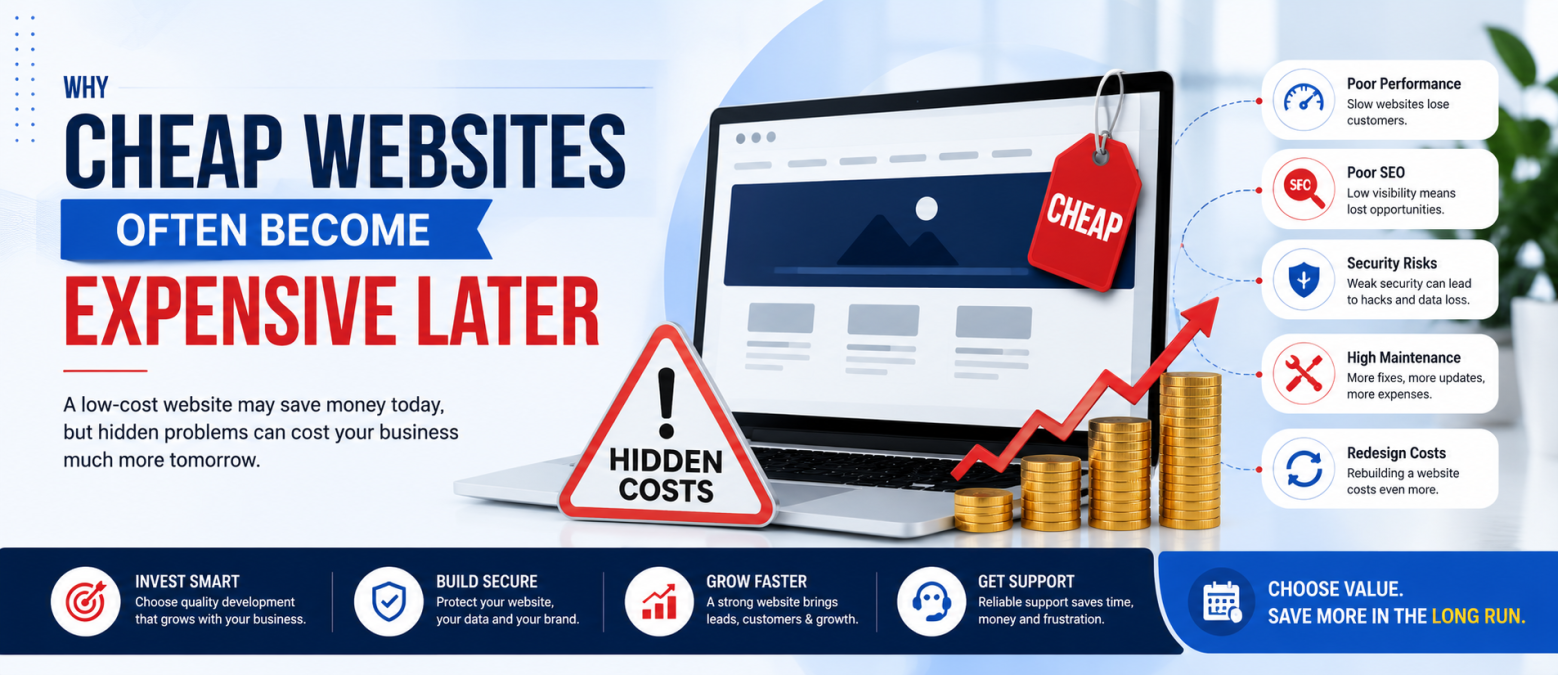
However, the real cost of a website isn't always visible at the beginning. What appears affordable today can become significantly more expensive in the future due to poor performance, limited functionality, security issues, redesign costs, and lost business opportunities.
At Shree Trinetra Technology LLP, we've spoken with many business owners who initially chose the cheapest website option available, only to discover later that they needed extensive repairs, redesigns, or complete redevelopment projects.
Let's explore why cheap websites often become expensive later and how businesses can make smarter long-term decisions.
The biggest problem with cheap websites is that many costs are hidden rather than eliminated.
To keep prices extremely low, developers often reduce development time, skip important optimizations, use outdated templates, avoid custom functionality, and provide little or no support after launch.
Initially, the website may look acceptable. However, problems usually begin appearing as the business grows and customer expectations increase.
The result is often additional spending that could have been avoided with proper development from the start.
A website's purpose is not simply to exist online. Its purpose is to help visitors become customers.
Many low-cost websites focus primarily on appearance while neglecting user experience. Navigation may be confusing, layouts may feel outdated, and important information can be difficult to find.
Visitors who become frustrated rarely complain—they simply leave and visit a competitor's website instead.
Losing even a few potential customers each month can cost far more than the savings gained from choosing a cheaper website.
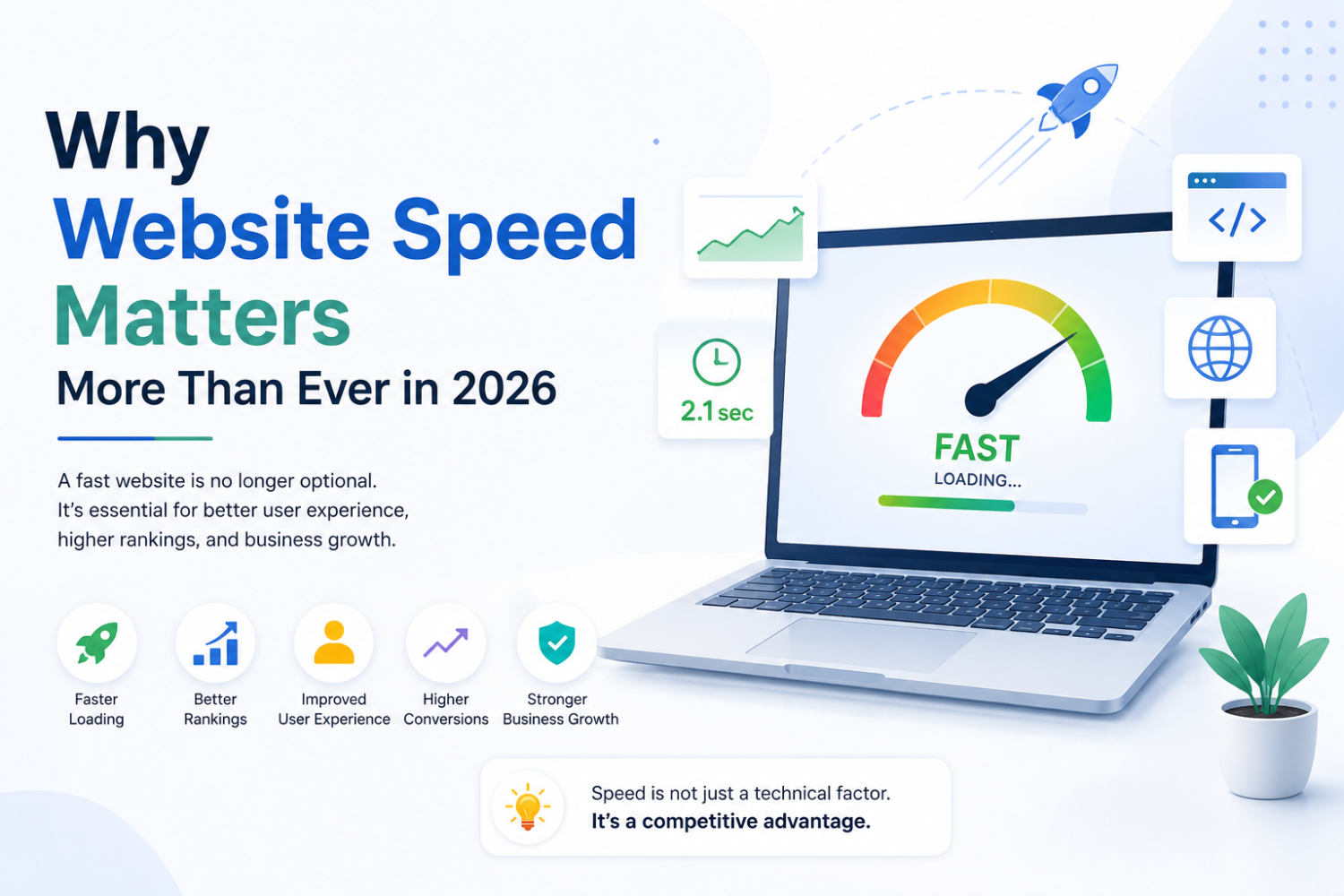
Website speed has become one of the most important factors affecting user experience and search engine rankings.
Many budget websites are built without proper optimization. Large images, poor coding practices, unnecessary plugins, and low-quality hosting can significantly slow down performance.
When pages take too long to load, visitors leave before exploring your products or services. Slow websites often experience higher bounce rates, fewer inquiries, and reduced conversions.
A website that drives away potential customers is never truly affordable.
Many businesses assume SEO can be added later. While ongoing SEO work is important, technical SEO should be considered during development.
Low-cost websites frequently ignore important SEO fundamentals such as:
Fixing these issues after launch often requires additional development work and higher costs.
Security is another area where inexpensive websites often cut corners.
Weak security practices may leave websites vulnerable to hacking attempts, malware infections, spam attacks, and data breaches.
Recovering from a security incident can require professional cleanup, website restoration, SEO recovery, and reputation management.
In many cases, prevention costs significantly less than recovery.
Businesses evolve over time. New services are introduced, customer expectations change, and additional functionality may become necessary.
Unfortunately, many low-cost websites are built without considering future growth.
When expansion becomes necessary, businesses often discover that their website cannot support new requirements without major redevelopment.
What seemed inexpensive initially becomes expensive when rebuilding becomes unavoidable.
Some developers offer extremely low prices because they provide little or no support after launch.
When technical issues occur, businesses may struggle to find assistance or face unexpected charges for even minor updates.
Reliable maintenance and support are valuable components of a professional website solution.
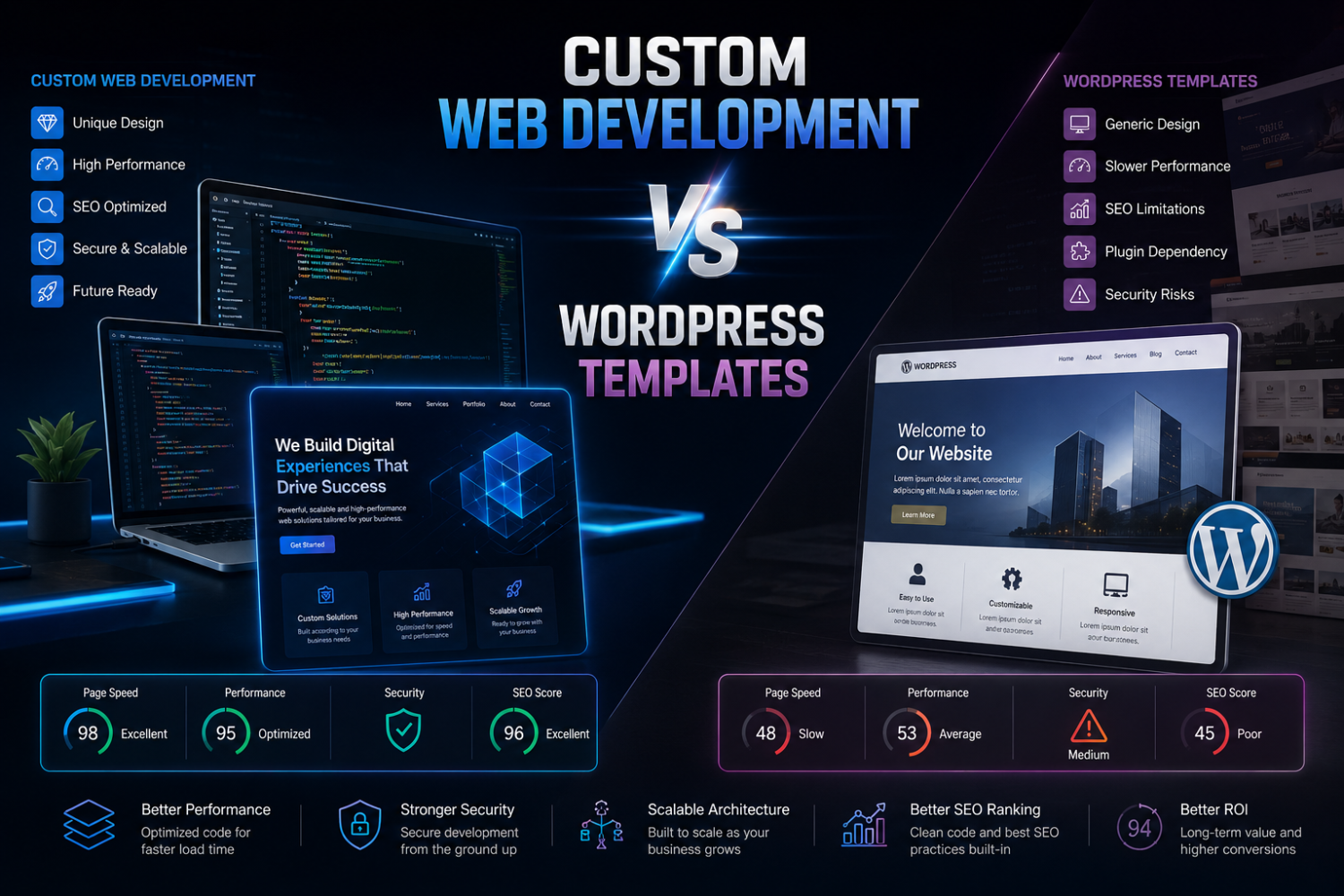
Templates are not necessarily bad. In many situations, they can provide an efficient and cost-effective starting point.
The problem occurs when generic templates are presented as fully customized solutions.
A business website should reflect your brand, support your goals, and provide flexibility for future growth. Extremely cheap websites often prioritize convenience for the developer rather than value for the client.
One of the most common outcomes of choosing a low-quality website is the need for a redesign within a short period.
Businesses often discover that their website no longer reflects their brand, performs poorly, or lacks important features.
Instead of making small improvements, they end up paying for a completely new website—effectively paying twice for the same goal.
Price and value are not the same thing.
A professional website may require a larger initial investment, but it can generate leads, improve credibility, support SEO efforts, and reduce future maintenance costs.
When evaluating website proposals, businesses should focus on long-term value rather than the lowest upfront price.
To be fair, not every business needs a highly customized website from day one.
A simple budget website may be suitable for:
The key is understanding the limitations and ensuring the solution aligns with your goals.
Instead of comparing quotes based only on price, compare what each company is actually providing.
Evaluate factors such as development quality, SEO readiness, security measures, mobile responsiveness, support services, scalability, and long-term value.
The best website investment is usually not the cheapest option—but the option that delivers the strongest return over time.
Choosing a website based solely on price can be a costly mistake. While saving money is important, businesses should also consider performance, security, SEO, scalability, and long-term support.
A well-developed website is an investment that continues delivering value long after launch. It strengthens your online presence, improves customer experience, and supports business growth.
At Shree Trinetra Technology LLP, we believe businesses achieve better results when they focus on value rather than simply selecting the lowest quote.
The cheapest website may cost less today, but the right website can save money, generate opportunities, and support growth for years to come.
Whether you need a website, eCommerce store, SEO, or digital marketing, our experts are here to help you achieve your goals.
Get Free Consultation


Comments (0)
No comments yet