
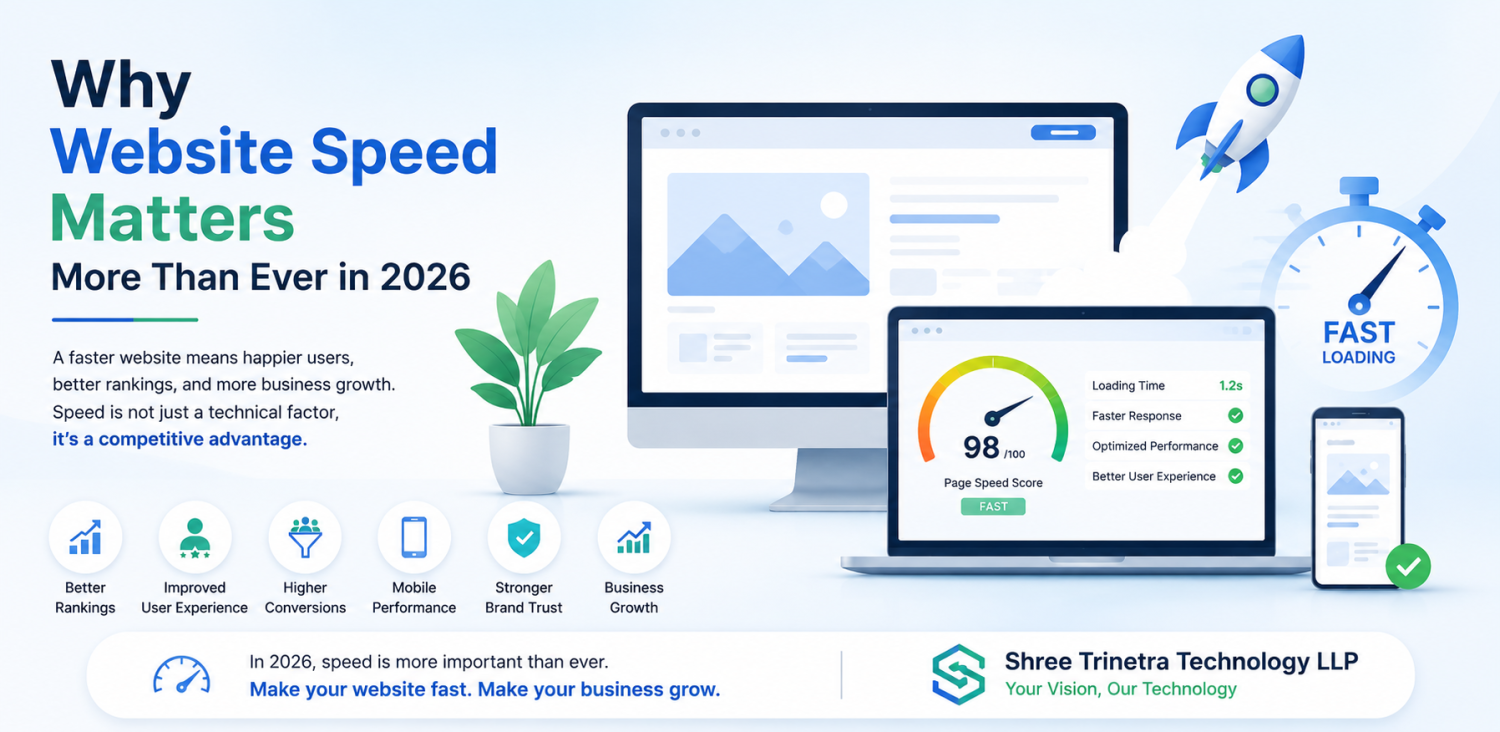
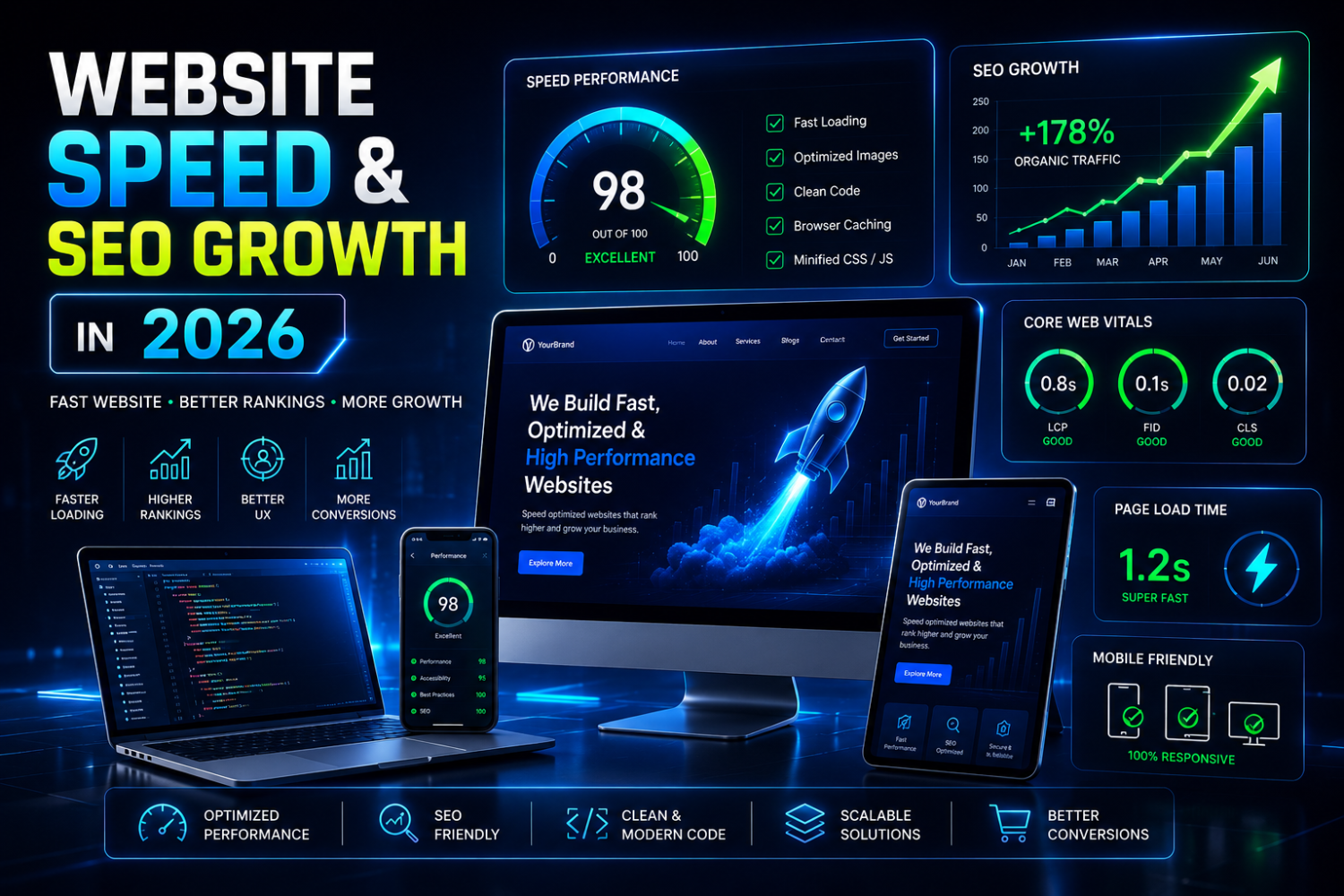
Imagine clicking on a website and waiting several seconds for it to load. Most users won't wait—they'll simply leave and visit a competitor's website instead. In 2026, website speed is no longer just a technical concern; it's a critical business factor that directly influences traffic, engagement, conversions, and revenue.
Today's internet users expect instant access to information. Whether someone is browsing a service website, shopping online, reading a blog, or requesting a quote, every second matters. A slow website can create frustration, reduce trust, and drive potential customers away before they even see what your business offers.
At Shree Trinetra Technology LLP, we've seen firsthand how website performance improvements can significantly increase user engagement, lead generation, and search engine visibility.
Visitors form an opinion about your website almost instantly. If pages load slowly, users often assume the business is outdated, unreliable, or unprofessional.
Your website is often the first interaction potential customers have with your brand. A fast and responsive experience creates confidence, while delays can damage credibility before a conversation even begins.
Search engines continue to prioritize user experience, and website speed remains an important ranking factor. Faster websites generally provide better experiences, which can help improve search visibility and organic traffic.
A well-optimized website not only loads quickly but also performs smoothly across desktop and mobile devices, contributing to stronger SEO performance over time.
Every extra second of loading time increases the chances of visitors leaving your website. Users have more choices than ever, and they rarely wait for a slow website when faster alternatives are available.
For businesses, this means lost inquiries, missed sales opportunities, and lower conversion rates. In competitive industries, website speed can become a deciding factor between gaining a customer and losing one.
A significant portion of web traffic now comes from mobile devices. Mobile users often browse while traveling, shopping, or multitasking, making speed even more important.
A website that loads quickly on desktop but struggles on mobile can still lose a large percentage of potential visitors. Modern websites must deliver consistent performance across all screen sizes and devices.
Fast websites feel smoother, more professional, and easier to use. Users can quickly navigate pages, access information, and complete desired actions without interruption.
This improved experience often leads to longer session durations, more page views, and higher engagement levels.
Many business owners view website speed as a technical issue, but its impact extends far beyond development. Faster websites support marketing campaigns, improve lead generation, increase customer satisfaction, and contribute to overall business growth.
When a website performs well, every marketing effort becomes more effective because users can interact with content without delays or frustration.
At Shree Trinetra Technology LLP, website speed optimization is integrated into our development process. We focus on clean coding practices, image optimization, efficient database structures, caching strategies, and performance-focused design techniques.
Our goal is to create websites that not only look professional but also deliver fast, reliable experiences that support business growth.
In 2026, website speed is no longer optional. It influences how users perceive your business, how search engines rank your pages, and how effectively your website converts visitors into customers.
A fast website creates better user experiences, supports SEO efforts, and helps businesses stay competitive in an increasingly digital world.
If you're investing in a website, performance should be considered from the very beginning—not treated as an afterthought. A faster website is not just better for users; it's better for business.
Whether you need a website, eCommerce store, SEO, or digital marketing, our experts are here to help you achieve your goals.
Get Free Consultation

Comments (0)
No comments yet